
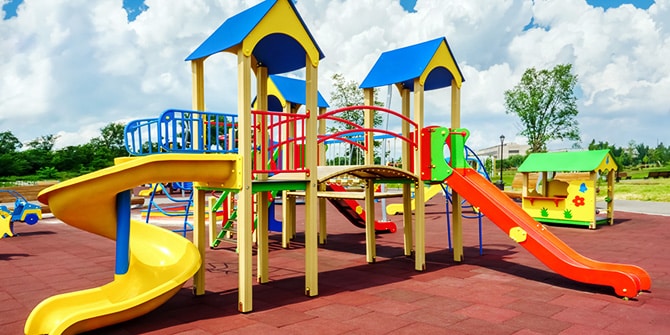
Outdoor play is serious business. School-aged children need about three hours of play a day for optimal physical and emotional development. Knowing when to replace old playground equipment is equally important. It involves considerations around risk, compliance, life cycle costs and community value.
This guide gives decision-makers a clear framework to spot critical wear, understand realistic lifespans and determine when replacement is smarter than continued repairs.
How Long Does Playground Equipment Last?
Playground equipment can last anywhere from 8-20 years or longer, depending on factors such as:
1. Materials and Manufacture
Powder-coated steel is durable and vandal-resistant. High-quality coatings and galvanization help prevent corrosion when they’re properly maintained. HDPE plastic and composite panels, which are increasingly used in construction components, are UV-stabilized to resist fading and cracking. However, their longevity still depends on factors like:
- Manufacturing processes.
- Panel thickness.
- Resin quality.
- Local UV exposure.
Treated wood offers a warm look and lower up-front cost, but without regular sealing and upkeep, it’s prone to rot, warping and splintering.
2. Use Frequency and Intensity
Playgrounds at busy schools and destination parks tend to wear out faster than those in lower-use settings, like homeowners associations (HOAs) or day cares. Dynamic features like swings, spinners and moving bridges put extra stress on chains, bearings and connectors. Regardless of the material, vandalism and misuse can quickly shorten a playground’s service life.
3. Environmental Exposure
Rain and humidity accelerate metal corrosion and wood degradation, and freeze-thaw cycles can loosen fasteners and stress joints. Sunlight causes plastics to chalk and become brittle if they aren’t UV-stabilized, while darker colors can get hotter, increasing thermal stress. Coastal salt air and de-icing salts speed up corrosion, while shaded, damp areas trap moisture and encourage mold and rot.
Proactive, documented maintenance meaningfully extends useful life and supports warranty coverage. Consider partnering with playground builders for ongoing maintenance to slow wear and protect your investment.
Signs to Replace Playground Equipment
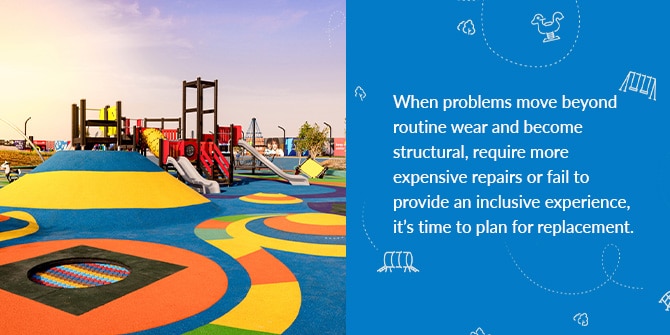
When problems move beyond routine wear and become structural, require more expensive repairs or fail to provide an inclusive experience, it’s time to plan for replacement.
Obvious Structural Failures
Serious structural issues demand immediate attention, often justifying replacement due to safety risks and repair complexity. Common structural failures to look out for include:
- Cracks or fractures in plastic slides, climbers or platforms, especially at stress points and connection interfaces.
- Significant rust or corrosion on metal posts, decks, welds or fasteners.
- Pitting or flaking metal and compromised welds.
- Rot, warping or splintering in wooden posts or rails.
- Broken, missing or incompatible components in guardrails, barriers, handholds and hardware.
- Soft, spongy areas at the base of posts where water collects, indicating wood rot or deteriorating footings.
- Loose or shifting footings, unstable concrete pads or wobbling structures, which may indicate foundation issues.
Frequent or Costly Repairs
Repeated breakdowns and rising repair bills are signs of systemic failure or end-of-life wear. The following issues will tell you when to replace old playground equipment:
- The same components require repeated repair at short intervals.
- Annual maintenance and repair costs trend upward each year.
- Parts are obsolete or unavailable, forcing temporary fixes or equipment closures that disappoint users.
- Warranty coverage has expired or is limited due to age and wear, reducing financial protection for future repairs.
If repair spend approaches a substantial fraction of replacement, a full replacement often delivers better safety, reliability and life cycle value.
Outdated Safety and Accessibility Standards
Standards evolve. Equipment that met guidelines 10 years ago may no longer align with current Consumer Protection Safety Commission (CPSC) guidance, ASTM F2373-11 and F1487-21 requirements, or Americans with Disabilities Act (ADA) accessibility expectations.
It’s important to recognize hazards like:
- Head and neck entrapment zones.
- Protrusion and entanglement risks.
- Inadequate barriers and guardrails.
- Noncompliant use zones.
You must also confirm that suspended components or older swing types meet current best practices for clearance and fall protection. Surfacing is another crucial point of compliance that must provide adequate impact absorption based on equipment height. The ADA enforces criteria for route accessibility, transfer stations, ground-level play value and inclusive features that cater to diverse abilities.
Issues that are widespread or cannot be cost-effectively retrofitted will indicate when you should replace or upgrade your playground equipment.
Creating a Proactive Inspection Plan
A formal inspection program reduces surprises, extends equipment life and supports defendable decisions. Schedule a Certified Playground Safety Inspector (CPSI) assessment. Safety audits will document and benchmark your current compliance and prioritize fixes.
In the meantime, use this checklist to move beyond casual look-arounds:
Daily or at least weekly visual checks:
- Scan for broken glass, vandalism, unsecured hardware, sharp edges or entrapment hazards.
- Look for surfacing displacement under swings, slides and high-wear zones. Rake and refill as needed.
- Remove debris. Check for standing water, animal nests or insects.
- Heat-check slides and decks in hot weather.
Monthly detailed inspections:
- Torque-check fasteners. Inspect chains, shackles, S-hooks, bearings and moving joints for wear or deformities.
- Examine posts, welds and deck interfaces for corrosion, cracks or movement.
- Measure loose-fill depths against fall height requirements.
- Inspect all surfaces for cracking, de-bonding or seam failures and document with photos.
- Log findings, actions and replacement parts to track trends so you’ll know when to replace old playground equipment.
Annual certified inspections:
- Hire a CPSI to conduct a comprehensive audit aligned with current CPSC and ASTM guidance.
- Use the report to prioritize remediation, plan budgets and determine repair-versus-replace decisions.
- Schedule CPSI audits at key times — before opening a new playground, after severe weather, following damage or relocation and when standards are updated.
The Benefits of Upgrading Your Play Space
Upgrading is often best for safer operations, predictable costs and a better community experience.
Reduce Long-Term Costs and Liability
Replacing aging systems with modern, compliant equipment stabilizes budgets and minimizes risk. New materials and engineered coatings are more durable, which reduces routine maintenance and service calls. Standardized parts and active warranties further improve uptime and cost predictability by making repairs faster and less frequent.
Current designs that align with CPSC and ASTM standards also reduce the likelihood of injuries and associated claims. Upgrading surfacing, like transitioning from loose-fill to poured-in-place rubber, can minimize labor for raking and top-offs while improving accessibility. This lowers operational burden and helps manage risk over time.
Enhance Community Value and Appeal
Modern playgrounds can become destinations that boost participation and civic pride. Fresh designs draw more families to the space, increase usage throughout the week and support active play that improves resident satisfaction.
Thoughtful themes and nature-inspired elements also elevate the character of parks, schools and HOAs, making the area feel welcoming and distinctive. A well-planned upgrade strengthens your case for grants and community fundraising by demonstrating clear benefits, strong design intent and broad impact.
Promote Inclusivity and Engagement
Designing for all ages and abilities improves equity and broadens a playground’s community impact. Accessible routes, transfer platforms and ground-level play elements make it easier for children with mobility needs to participate fully alongside their peers.
Adding sensory-rich panels, musical features and quiet retreat spaces supports children with diverse cognitive and sensory needs, helping them regulate and stay engaged. Thoughtful site amenities like shade, seating and perimeter fencing further improve caregiver comfort and supervision. The aim is longer visits and more positive experiences for everyone.
Plan Your Next Playground With River Valley Recreation
Knowing when to replace old playground equipment is key to managing safety and resources effectively. When it’s time to upgrade, partnering with an expert ensures your new play space is safe, durable, and aligned with today’s standards and community expectations.
River Valley Recreation is your end-to-end partner for modern, inclusive, and compliant playgrounds and site amenities. Contact our team today for a professional consultation or browse recent projects for inspiration. We can help you evaluate your current site, develop a phased plan and deliver a play space your community will love for years.
